
2026-10-22 · 9 min read
Digital Kitchen Scale Buying Guide in Pakistan: Accuracy, Features, Capacity and Practical Tips
Learn how to choose a digital kitchen scale in Pakistan by comparing weighing capacity, accuracy, tare functions, display quality and power options. This practical guide also explains correct weighing techniques, cleaning, maintenance and common buying mistakes.
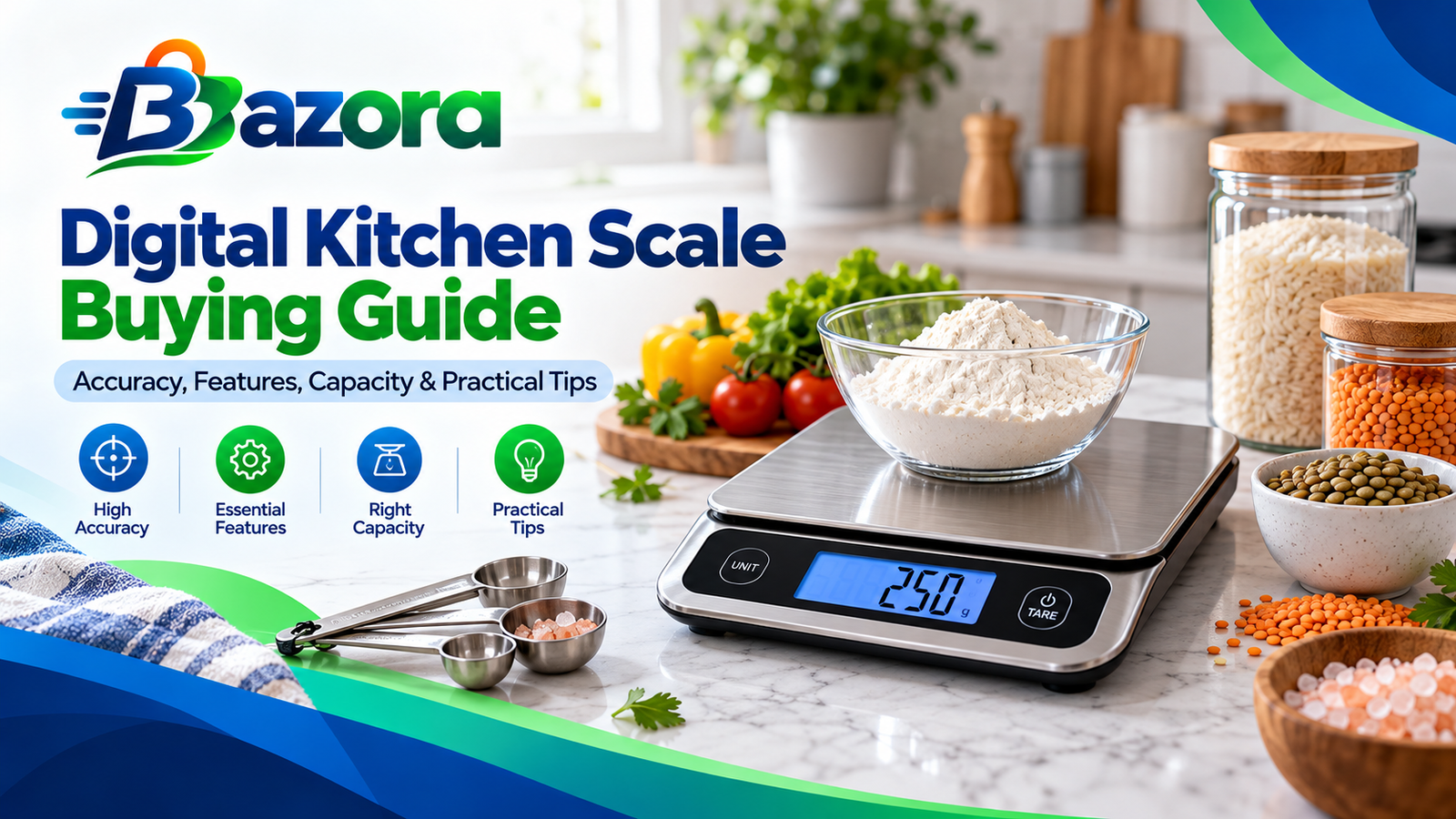
Whether you are preparing everyday meals, measuring ingredients for homemade cakes or dividing food into consistent portions, accurate weighing can make kitchen work easier. A digital kitchen scale in Pakistan is a practical measuring tool for home cooks, baking enthusiasts and people who prefer weighing ingredients instead of estimating quantities by eye. However, different scales can vary in capacity, display quality, resolution, durability and convenience.
Choosing the right model involves more than looking at a maximum weight printed on the packaging. You should consider what you normally weigh, how small your ingredient quantities are, whether you need a tare function, and how comfortably the scale fits into your kitchen. This guide explains the essential buying criteria, practical usage techniques and maintenance habits that can help you make a sensible purchase.
Why Use a Digital Kitchen Scale?
Traditional measuring cups and spoons are convenient, but the quantity of an ingredient inside them can change depending on packing, moisture, scoop technique and ingredient shape. Flour, rice, lentils and sugar can settle differently in a measuring cup. A kitchen scale measures mass directly, helping you repeat recipes more consistently.
Weighing is particularly useful for baking, where ingredient proportions affect texture, and for preparing consistent portions of meat, vegetables, rice or dry ingredients. It can also help when dividing bulk groceries into smaller storage containers. A scale does not automatically make a meal healthier, but it offers a clearer way to measure the amount being prepared.
Digital Kitchen Scale in Pakistan: Features That Matter
1. Maximum Weighing Capacity
Start by identifying the heaviest combination of food and container you expect to weigh. A scale advertised with a capacity such as 5 kg or 10 kg describes a maximum load, not necessarily a recommendation to operate continuously at that limit. Actual capacity depends on the individual model and must be checked in its specifications.
For ordinary home recipes, a smaller-capacity scale may be sufficient. For larger bowls, bulk flour portions or food preparation involving several ingredients, a higher capacity can offer more flexibility. Remember that the weight of the bowl counts toward the maximum load even when you use the tare function.
2. Display Resolution Versus Accuracy
Some kitchen scales display measurements in increments such as 1 g, while others may show smaller increments. These increments describe display resolution, not guaranteed measurement accuracy. A screen displaying 1 g steps does not automatically mean every reading is accurate to within 1 g.
Check whether the manufacturer gives a stated tolerance, minimum reliable load or other measurement limitations. For ordinary cooking, gram-level readings may be practical, but very small quantities of yeast, spices or baking additives may require a different measuring tool. Never rely on an ordinary consumer kitchen scale for medicine or another safety-critical dose.
3. Tare or Zero Function
The tare function is among the most useful features of a digital scale. It allows you to place an empty bowl on the platform and reset the displayed reading to zero before adding ingredients. You can also tare between ingredients when following a recipe.
For example, place a mixing bowl on the scale, press the tare button, add flour, reset the reading again and then add sugar. This reduces the need for separate measuring containers. However, the combined weight of the bowl and everything inside it must remain within the scale's permitted capacity.
4. Measuring Units
Look for clearly labeled units that suit your recipes, especially grams and kilograms. Ounces may be helpful when following international recipes. Some models offer additional modes, but you should verify how those modes work before relying on them.
A liquid-volume mode, when provided, may depend on assumptions about the density of the liquid. Weight and volume are not interchangeable for every ingredient. When precise results matter, follow the recipe's specified unit and use an appropriate measuring tool.
5. Display and Button Design
A clear, easy-to-read screen is valuable when working with large bowls. Check whether the bowl obstructs the display, whether the digits can be seen in normal kitchen lighting and whether the buttons respond consistently.
Touch-sensitive controls may look modern, while physical buttons can be easier for some users to operate. The best choice depends on comfort, cleaning preferences and the quality of the individual product.
Choosing the Right Platform and Build Quality
Digital scales may use stainless steel, glass, plastic or combinations of materials. Stainless steel surfaces can be convenient to wipe down, while glass platforms may offer a smooth appearance but require careful handling. Plastic models can be lightweight, although construction quality matters more than material alone.
Inspect whether the platform is stable, whether the feet grip the countertop and whether the surface comfortably supports your common bowls and plates. A very narrow platform can make large mixing bowls awkward to position.
Do not assume that a scale is waterproof merely because its surface looks smooth. Check the product's cleaning instructions and any specific protection claims. Unless the manufacturer explicitly permits it, avoid immersing the device in water or washing it under a running tap.
Power Supply and Automatic Shut-Off
Kitchen scales may operate using replaceable batteries or rechargeable power systems, depending on the model. Before buying, verify the exact battery type, whether batteries are included and how the battery compartment opens. For rechargeable designs, check the charging connection, supplied accessories and manufacturer instructions.
An automatic shut-off feature may conserve energy, but a very short shut-off interval can interrupt slow ingredient preparation. If you often add ingredients gradually, look for a model that provides sufficient time before switching off. A low-battery warning is another potentially useful feature.
How to Use a Digital Kitchen Scale Correctly
Use a Flat, Firm Surface
Place the scale on a firm, level countertop rather than on a soft towel, uneven tray or moving surface. Soft or unstable surfaces can affect how the load reaches the weighing sensors, producing inconsistent readings.
Allow the Scale to Settle
Switch on the scale according to its instructions and wait for a stable zero reading. If using a container, place it centrally and apply tare before adding food. Avoid touching the container or leaning on the counter while measuring.
Add Ingredients Slowly
Pour flour, sugar, rice or other ingredients gradually, especially near the desired quantity. Give the display a moment to stabilize before making an adjustment. If you accidentally exceed the target, remove a little of the ingredient rather than repeatedly resetting the scale.
Avoid Excessive Loads
Do not put loads above the manufacturer's rated capacity onto the scale. Heavy containers, sudden impacts and pressure on the platform can damage the measuring mechanism. If an overload indicator appears, remove the load and follow the manufacturer's instructions.
Practical Uses in Pakistani Kitchens
A digital kitchen scale can be useful for measuring atta when preparing homemade dough, portioning basmati rice, dividing lentils for daal, weighing ingredients for biscuits and cakes, or checking quantities before storing groceries.
For example, someone preparing chapati dough can record the mass of flour and water used in a successful batch. That reference can make it easier to repeat the same dough consistency later, although water requirements can still vary with flour type and moisture.
Home bakers can weigh flour, sugar, butter and other ingredients more consistently than when relying only on loosely filled cups. Families preparing bulk snacks can divide ingredients into repeatable batches. For meal preparation, containers can be tared so that the displayed result reflects only the food.
Common Buying Mistakes to Avoid
- Choosing only by advertised capacity: A high maximum load does not necessarily mean better performance with small quantities.
- Confusing resolution with accuracy: Small display increments are not proof of measurement precision.
- Ignoring the minimum usable load: Some models may not reliably detect very small amounts.
- Overlooking the display position: A large bowl may hide the screen during use.
- Forgetting container weight: Tare changes the displayed number but does not increase the maximum load.
- Assuming every scale is rechargeable: Verify whether the device uses replaceable batteries or a rechargeable system.
- Trusting unsupported claims: Verify material, warranty, water resistance and accuracy claims in the actual product listing or manual.
Cleaning, Storage and Long-Term Care
Wipe the platform after use with a soft, slightly damp cloth, following the manufacturer's cleaning instructions. Remove flour dust, sugar, grease and food residue before buildup occurs. Where appropriate, use a separate food-safe container to prevent direct contact between ingredients and the scale.
Keep liquids away from buttons, seams, battery compartments and charging connections unless the scale is specifically designed for exposure. Avoid harsh abrasive cleaners and unnecessary pressure on the platform.
Store the scale on a dry, protected shelf where heavy cookware cannot fall onto it. If it will remain unused for an extended period, follow the manufacturer's battery-storage recommendations. If measurements become inconsistent, inspect the surface, battery condition and zero setting before assuming the device is defective.
How to Check Whether Your Scale Is Measuring Consistently
One simple consistency check is to weigh the same stable object several times, removing it completely between measurements. Readings should be reasonably repeatable within the product's stated performance limits. This does not prove the scale's absolute accuracy, because consistent readings can still be incorrect.
For an actual accuracy check, use an appropriate reference weight with known mass, within the scale's supported range. Follow the manual if the scale has a calibration function. Do not assume a random household object or coin has an exact reference weight, and do not try an undocumented calibration sequence.
Before Ordering a Kitchen Scale Online in Pakistan
Review the product listing carefully. Confirm maximum capacity, display increments, stated accuracy where available, unit options, tare support, platform dimensions, power requirements and included accessories. Check the seller's warranty terms, return conditions and the procedure for reporting a damaged or defective item.
Inspect available product photographs for readable controls and a platform suitable for your containers. If a specification is missing, request clarification rather than assuming that a feature is included. When comparing products, prioritize practical suitability, clear technical information and dependable after-sales arrangements over exaggerated promotional language.
Conclusion: Choose a Scale That Fits Your Cooking Habits
The best digital kitchen scale in Pakistan is not necessarily the one advertising the highest capacity or the greatest number of functions. A sensible choice is a stable, readable and appropriately sized device with useful weighing units, dependable tare operation and a power system you can manage easily.
Consider the foods you prepare most often, check the manufacturer's limitations and follow good weighing and cleaning practices. These simple steps can help you use a kitchen scale effectively for daily meals, baking, ingredient preparation and organized household cooking.